

Businesses depend on a tangled web of telecommunications services, from mobile devices and data plans to internet and cloud connectivity. This intricate network of telecom assets creates a significant management challenge for most companies. Untangling the associated contracts, invoices, and usage patterns often consumes valuable time and resources, directly impacting a company’s bottom line. This is where Outsourced Telecom Expense Management (TEM) becomes a powerful solution.
Rather than getting bogged down in administrative tasks, companies can leverage specialized third-party providers to streamline their telecom expenses. This strategic partnership helps businesses gain control, optimize spending, and transform a significant cost center into a source of efficiency.
By delegating the complexities of telecom management to experts, you can free your internal teams to focus on core business objectives. Outsourcing TEM is more than just a cost-cutting measure; it is a strategic move that enhances visibility, mitigates risk, and positions your business for scalable growth. It allows you to operate more efficiently and gain a significant competitive advantage.
Understanding Outsourced Telecom Expense Management
To truly appreciate the value of an outsourced solution, we first need to understand the core components of telecom expense management (TEM).

What is Telecom Expense Management (TEM)?
At its heart, TEM is a comprehensive strategy for managing and optimizing all of a company’s telecommunications costs and assets. It’s a multi-faceted expense management process designed to bring order to the chaos of modern telecom.
Core components of TEM typically include:
- Invoice Processing: Auditing and validating every single telecom invoice to ensure accuracy. This involves cross-referencing billed services with contracted rates and actual usage.
- Contract Management: Maintaining a centralized database of all telecom contracts, tracking key dates, and ensuring compliance with contract terms. This includes managing renewals, renegotiations, and service-level agreements (SLAs).
- Usage and Inventory Tracking: This involves keeping an accurate inventory of all telecom assets, such as mobile devices, phone lines, and data plans. It also involves monitoring telecom usage to identify underutilized or unnecessary services.
Many companies use telecom expense management software or platforms to handle these tasks effectively. These systems automate crucial aspects of the TEM process, such as centralizing billing data, conducting automated audits, and tracking telecom assets in real time. A robust TEM solution provides a single, unified view of a company’s entire telecom infrastructure.
Also Read: Tech Support Outsourcing: Your Complete Step-by-Step Guide
Why Outsource TEM? The Business Case
While an internal team can manage some of these tasks, the growing complexity of the telecom environment makes it difficult and often inefficient. Today’s businesses deal with a fragmented ecosystem of services from multiple providers, often across different locations. This leads to billing chaos, with multiple telecom invoices arriving in various formats each month.
In-house telecom management often faces significant limitations. An internal team, whether in finance or IT, may lack the specialized expertise needed for effective telecom cost management. They are often juggling numerous other responsibilities, and the time-intensive nature of managing telecom expenses can lead to human error, missed savings opportunities, and a constant struggle to keep up.
For these reasons, many businesses are turning to outsourcing telecom expense management. By leveraging a dedicated team of experts, companies can move from a reactive, manual process to a proactive, automated, and strategic approach to telecom expense control. This shift allows a company to focus on its core competencies while benefiting from a provider’s deep knowledge of the telecom market, industry trends, and complex billing structures.
Also Read: Mastering Staff Augmentation: A Complete Guide for Business Leaders
In-House vs. Outsourced Telecom Expense Management
Any organization’s decision to manage telecom expenses internally or outsource them is pivotal. It’s a choice between retaining full control and leveraging specialized external expertise.
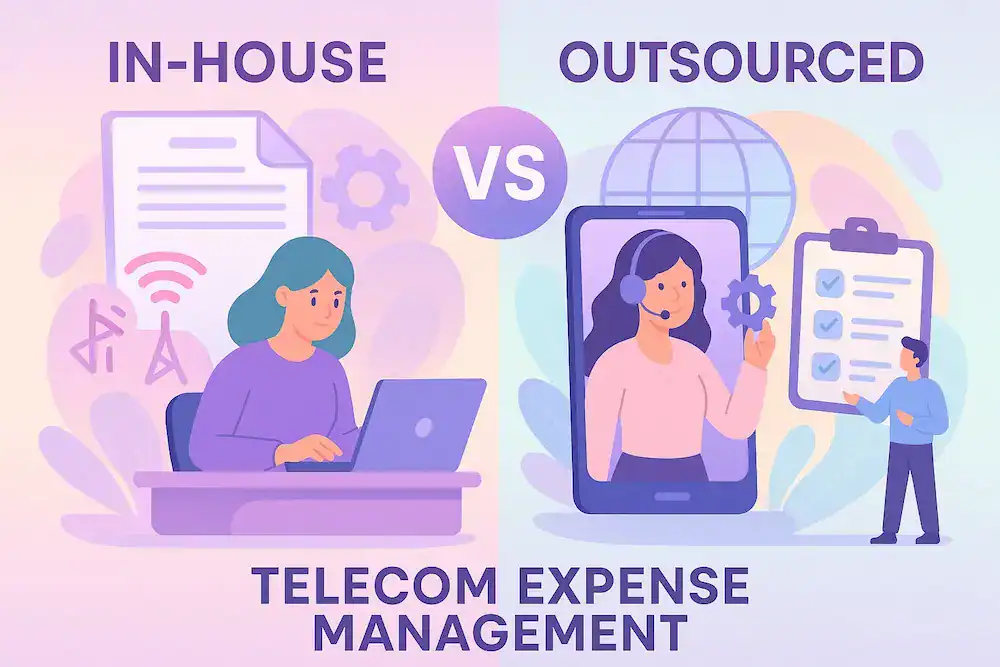
In-House TEM
In an in-house telecom expense management model, the responsibility typically falls on existing internal teams, such as finance, IT, or a dedicated administrative group. These teams often use manual processes, spreadsheets, or basic expense tracking tools to manage telecom bills and contracts.
- Pros: The primary advantage of an in-house approach is the greater control and direct oversight over every process. There is no need to share sensitive telecom data with a third party. For businesses with minimal telecom complexity, this can be a viable option.
- Cons: This model is highly resource-intensive. It requires significant time and effort from an internal team that may not have the necessary expertise. The high risk of human error, limited scalability, and a steep learning curve can lead to missed opportunities for cost savings and inefficient operations. A company with dozens or hundreds of devices and contracts will quickly find manual processes unsustainable.
Outsourced TEM
Outsourced TEM involves partnering with a specialized third-party provider. These providers use advanced platforms, often powered by AI-driven analytics, and bring a wealth of industry expertise to the table. Their entire business is built around managing telecommunications costs.
- Pros: Outsourcing offers numerous benefits. It significantly reduces the workload on internal teams, leading to faster results and a more proactive approach to expense management. Providers have superior negotiation leverage with service providers, which can result in better telecom contracts and improved SLAs. The use of sophisticated tools leads to greater accuracy and ongoing optimization. This approach provides a clear path to significant savings.
- Cons: Outsourcing requires careful vendor vetting to ensure a good fit. It is dependent on external expertise, and businesses must be comfortable sharing their telecom data with a third-party provider. However, reputable TEM vendors have robust data protection and security protocols to mitigate these concerns.
Choosing the Right Approach
For many growing or multi-location organizations, outsourced telecom expense management offers a superior return on investment (ROI) and greater scalability. The potential for significant savings from identifying billing errors and optimizing services often outweighs the initial costs.
Conversely, a small business with a handful of mobile plans and a single internet service may find that managing telecom expenses in-house is sufficient. However, for any organization with a complex telecom infrastructure, a dedicated TEM solution is the most effective path to cost control and operational efficiency.
Learn More: A Comprehensive Guide to Hiring Offshore Developers
Key Efficiency and Cost-Saving Benefits of Outsourced TE
The real value of outsourced TEM lies in its ability to impact a company’s bottom line and operational efficiency directly. By streamlining a notoriously complex function, it provides tangible benefits that extend far beyond simply paying bills.
Significant Cost Savings from Billing Control and Optimization
One of the most compelling reasons to embrace an outsourced TEM solution is the potential for substantial telecom savings. The telecom billing landscape is rife with errors.

A provider’s specialized team is trained to identify and rectify these issues. They systematically audit every telecom invoice for:
- Billing Errors: Charges for services that were never ordered or are not in the contract.
- Unused Services: Lines, data plans, or features that are still being billed but are no longer in use.
- Overcharges: Incorrect rates, taxes, or fees applied to a bill.
These audits often yield 10-30% savings on total telecom spend. An outsourced provider’s expertise in spotting these discrepancies, combined with their ability to manage the recovery process, ensures that businesses aren’t overpaying for their telecom services.
Read More: The Ultimate Guide to Offshore Recruiting for Tech Companies
Enhanced Business Efficiency and Time Savings
The time a finance or IT team spends manually processing telecom invoices, reconciling inventory, and communicating with service providers is not spent on core business activities. By automating these tasks, outsourced telecom expense management frees up valuable internal resources.
- Invoice Audits: Automated systems can process hundreds or thousands of invoices in a fraction of the time it would take a human.
- Inventory Reconciliation: The platform automatically reconciles billing data with a company’s telecom assets, ensuring that all devices and services are accounted for.
- Vendor Communications: The TEM provider handles the back-and-forth with telecom providers to resolve billing disputes, manage service changes, and optimize services.
This shift allows internal IT and finance staff to focus on strategic, value-adding projects rather than getting bogged down in administrative tasks. This is a crucial element of improving overall operational efficiency.
Better Visibility, Control, and Reporting
The lack of visibility is a common pain point for businesses managing telecom expenses in-house. Outsourced TEM platforms solve this by providing unified dashboards that integrate all invoices, contracts, telecom usage data, and inventory into a single pane of glass.
This unified view provides:
- Data-driven Insights: Companies can analyze their telecom data to understand usage patterns, identify high-cost centers, and make informed decisions.
- Enhanced Budgeting and Forecasting: With accurate data, businesses can create more realistic budgets and forecasts for their telecom spend.
- Holistic View: A company can see exactly what they are paying for, who uses which service, and whether those services deliver value.
This level of insight and control is difficult to achieve without a specialized telecom expense management system.
Further Reading: How to Hire the Best Operations Manager for Your Business
Access to Specialized Expertise and Advanced Technologies
Perhaps the most significant advantage of an outsourced TEM solution is gaining access to a team of experts with deep domain knowledge of the telecom industry. These professionals understand the nuances of telecom contracts, billing structures, and industry best practices.
Furthermore, these providers continuously invest in advanced technologies:
- Continuous Software Improvements: TEM platforms are constantly updated with new features and functionality to handle new telecom technologies like 5G, IoT, and SD-WAN.
- AI-Driven Tools: Many solutions use AI and machine learning to proactively detect billing anomalies, predict future costs, and recommend optimization opportunities.
This expertise and technology would be prohibitively expensive to build and maintain in-house, making the outsourced model a cost-effective way to stay ahead of the curve.
Know More: Top Soft Skills Recruiters Look for in Today’s Job Market
Strategic Advantages for Business Performance
Beyond direct cost savings and efficiency gains, outsourced telecom expense management offers several strategic benefits contributing to a company’s overall performance and long-term stability.

Vendor and Contract Management Excellence
Effective contract management is a cornerstone of telecom cost control. A specialized TEM provider brings significant leverage to the table. They manage hundreds or thousands of telecom contracts for various clients, giving them a strong position to:
- Negotiate Better SLAs: Secure more favorable service-level agreements and pricing structures.
- Optimize Contract Terms: Ensure contract terms align with a company’s actual needs, avoiding unnecessary services and ensuring the best rates.
- Manage the Contract Lifecycle: Proactively track renewal dates and negotiate new terms before contracts automatically renew at unfavorable rates.
This level of contract negotiations can lead to long-term telecom savings that are difficult to achieve for a single company acting alone.
Further Reading: How to Hire the Best Operations Manager for Your Business
Scalability and Adaptability for Growth
As businesses grow, their telecom needs evolve. This could mean adding new employees, opening new offices, or adopting new technologies. An in-house team can quickly become overwhelmed by this growth. An outsourced TEM partner, however, is built for scalability.
They can seamlessly handle:
- Additional Devices: Integrating new mobile devices or laptops into the system.
- New Regions: Consolidating billing and services for new offices, both domestically and internationally.
- Emerging Services: Managing and adopting new services, such as 5G mobile devices, IoT connectivity, or cloud communication platforms.
This scalability ensures that a company’s telecom management keeps pace with its growth without straining internal resources.
Explore: The Ultimate Guide to Telecommunications Website Design
Risk Mitigation, Compliance, and Security
Outsourced TEM is critical in mitigating risks associated with telecom bills and contracts. A professional provider ensures:
- Audit Trails: Maintaining a clear and comprehensive record of all changes, payments, and disputes. This is vital for financial audits.
- Regulatory Alignment: Ensuring billing and usage practices align with relevant industry regulations and compliance frameworks.
- Reduced Billing Disputes: By proactively identifying and resolving billing errors, providers minimize the risk of costly and time-consuming disputes with service providers.
Furthermore, reputable TEM providers are well-versed in data security protocols, ensuring that sensitive telecom data is handled with the utmost care. This protects a company from potential data breaches and financial liabilities.
Discover More: Top Customer Support Outsourcing Companies
Overcoming Implementation Challenges
While the benefits of an outsourced telecom expense management program are clear, some initial challenges must be considered. Proactively addressing these can ensure a smooth and successful deployment.

Investment and Cost Considerations
Engaging a TEM provider involves initial setup costs and ongoing subscription fees. Some businesses may see this as a significant barrier. However, it’s crucial to consider this an investment rather than just an expense.
The return on investment, driven by the significant savings from bill audits, contract renegotiations, and service optimization, often far outweighs the initial and ongoing fees. A company should always evaluate the potential ROI and long-term cost savings when making this decision.
Data Security and Control Concerns
Sharing sensitive financial and telecom data with a third party is a valid concern. However, reputable telecom management companies understand the importance of data protection. They invest heavily in:
- Advanced Security Protocols: Using encryption, secure portals, and multi-factor authentication to protect client data.
- Compliance Frameworks: Adhering to international security standards and compliance frameworks to ensure the highest level of data security.
Before engaging a partner, it’s essential to conduct a thorough vetting process and ask for detailed information about their security policies. This due diligence ensures that your sensitive information is in safe hands.
Explore More: The Complete Guide to Outsourced Customer Support
Best Practices for Effective Outsourced TEM Deployment
To maximize the benefits of an outsourced TEM program, a company must follow a strategic deployment plan.
Conduct a Thorough Internal Telecom Audit
Before you begin the search for a partner, it’s essential to understand your current state. Conduct a comprehensive internal audit to:
- Map Existing Contracts: Gather all your telecom contracts, including renewal dates and current rates.
- Identify Services: Inventory all existing telecom services, devices, and phone lines.
- Analyze Spend Patterns: Get a clear picture of your total telecom spend over the last 12-24 months to identify trends and historical issues.
This audit establishes a baseline and helps you set realistic expectations with your potential TEM partner.
Select a Trusted and Specialized TEM Partner
Choosing the right TEM provider is the most critical step. Look for a partner with:
- Industry Reputation: Check for a proven track record and positive client testimonials.
- Domain Knowledge: Ensure they have deep expertise in the specific telecom services you use, including wireline, wireless, and cloud services.
- Automation Capabilities: A strong platform is crucial. Look for a provider with powerful automation, analytics, and reporting capabilities.
- Security: Verify their data protection and security protocols.
Set Clear Objectives and KPIs
At the outset, establish clear, measurable goals for your outsourced telecom expense management program. These Key Performance Indicators (KPIs) should include:
- Cost-Reduction Goals: A target percentage for telecom savings.
- Operational Efficiency: Time saved in invoice processing and dispute resolution.
- Visibility: The ability to see and track all telecom assets and spending in a unified dashboard.
Ensure Continuous Performance Review
Outsourced TEM is not a set-it-and-forget-it solution. To ensure its ongoing success, you must:
- Use Insights Dashboards: Regularly review the reports and analytics provided by the TEM platform.
- Conduct Audits: Periodically audit the TEM provider’s work to ensure accuracy and compliance.
- Engage in Optimization Cycles: As your telecom needs change, work with your partner to identify new opportunities for optimization.
Also Learn: Why More Companies Are Choosing HR Outsourcing for Strategic Growth
How to Measure the Success of an Outsourced TEM Program
A successful telecom expense management program is one that delivers measurable results. Here are the key metrics to track:

- Percentage Cost Savings: The most direct measure of success. Compare your telecom costs before and after implementing the program.
- Error Resolution Rate: Track how many billing errors are identified and successfully resolved.
- Time Saved in Invoice Processing: Quantify the reduction in time your internal teams spend on manual invoice handling.
- Contract Renegotiation Wins: Document the savings and improved terms secured during contract negotiations.
By benchmarking these metrics against industry averages and tracking them over time with the help of analytics dashboards, you can clearly demonstrate the value of your outsourced TEM solution and ensure it continues to deliver on its promises.
Explore Further: The Benefits of Hiring a Remote HR Assistant
Real-World Impact and Future Trends in Outsourced TEM
Case studies and forward-looking insights reveal the tangible benefits and technological advancements shaping the future of outsourced TEM.
Sample ROI and Savings Metrics
The impact of outsourced telecom expense management is often substantial. For a typical enterprise, savings of 10-30% are a common outcome.
This includes savings from identifying billing errors, eliminating unused services, and securing better contract rates. These savings improve a company’s bottom line, freeing up capital for other strategic investments.
Industry Use Cases
- Global Enterprise: A large corporation with offices in multiple countries faces a logistical nightmare with hundreds of telecom service providers and thousands of telecom bills in various languages and currencies. An outsourced TEM provider consolidates all billing, audits invoices, and ensures compliance with local regulations, resulting in a single, unified view of global telecom spend.
- SaaS Company: A fast-growing tech company uses mobile devices, cloud services, and a complex VoIP system. An outsourced TEM partner helps them optimize their mobile data plans, align cloud costs with their business usage, and ensure all services are being utilized effectively, leading to both telecom savings and improved operational efficiency.
Know More: How to Successfully Outsource Your Customer Support
AI, Machine Learning, and Automation in TEM
The future of outsourced telecom expense management is increasingly driven by technology. AI-driven TEM platforms are moving beyond simple automation to:
- Proactive Anomaly Detection: AI algorithms can analyze telecom usage patterns and flag unusual activity, such as a sudden spike in data use, before a massive bill arrives.
- Predictive Cost Forecasting: Using historical telecom data, machine learning models can predict future telecom costs, helping businesses with long-term financial planning.
This continuous innovation ensures that TEM services remain a vital tool for modern businesses.
Explore More: How AI is Transforming Recruitment Processes
Common Mistakes to Avoid in Outsourced Telecom Expense Management
To ensure a successful partnership, it’s crucial to avoid these common pitfalls:

- Choosing a Provider Solely on Price: A low price might indicate a lack of advanced features or expertise. Prioritize capability, experience, and the ability to deliver a strong ROI over the cheapest option.
- Failing to Set Measurable Goals: Without clear KPIs, success is impossible to measure. Define what you want to achieve upfront, whether it’s a specific percentage of cost reduction or improved visibility.
- Neglecting to Review TEM Reports: The insights provided by the TEM dashboard are useless if not reviewed. Analyze the data regularly to make informed decisions and work with your provider to identify new opportunities.
- Overlooking Contract Fine Print: Always read the contract with the TEM vendor carefully. Understand their fee structure, responsibilities, and handling of data security and confidentiality.
Also Read: Top Benefits of Outsourced Customer Support for Startups
Conclusion
The complexity of modern telecommunications costs is an unavoidable reality for any business. However, it doesn’t have to be a source of constant frustration and financial drain. By embracing outsourced telecom expense management, businesses can transform a chaotic, time-consuming process into a strategic lever for efficiency, cost control, and scalable growth.
This approach provides more than just a reduction in spending. It delivers a unified view of a company’s telecom infrastructure, frees up valuable internal resources, and gives a company access to specialized expertise otherwise out of reach. The use of advanced telecom expense management solutions, powered by automation and AI, enables businesses to audit, analyze, and forecast their telecom spend with unprecedented accuracy.
To begin your journey toward business transformation, the first step is to conduct a thorough internal audit of your existing telecom expenses. From there, you can start your search for a qualified telecom expense management provider who can help you unlock a new level of financial control and operational efficiency. The right partnership can turn your telecom bills from a liability into a source of strategic advantage.
FAQs About Outsourced Telecom Expense Management
What are telecom expense management services?
Telecom expense management services help businesses track usage, manage invoices, and optimize contracts for phone systems, mobile devices, and other technology services. They aim to reduce costs, control expenses, and improve customer satisfaction for enterprise clients.
How does the telecom expense management process work?
The process involves auditing invoices, monitoring usage, identifying underutilized services, and reallocating costs to the right departments. Providers use inventory management tools and cost allocation reports to ensure accurate billing and better decision-making.
Can telecom expense management help with managing telecom contracts?
Yes. A key benefit is managing telecom contracts effectively. This includes negotiating better rates, aligning terms with actual usage, and ensuring technology expense management strategies cover all associated costs.
What is the difference between wireless expense management and mobile device management?
Wireless expense management controls data plans, voice services, and wireless contracts costs. Mobile device management adds security, usage monitoring, and device configuration for smartphones, tablets, and laptops. Many enterprise clients use both for a complete solution.
Is it better to manage the process in-house or outsource?
Managing the process in-house can work for small businesses with limited resources and fewer contracts. However, outsourcing often saves money by leveraging expert knowledge, advanced tracking tools, and customized solutions that scale with growth.


